


Fishing Games and 7 Risky Mistakes Players Should Avoid
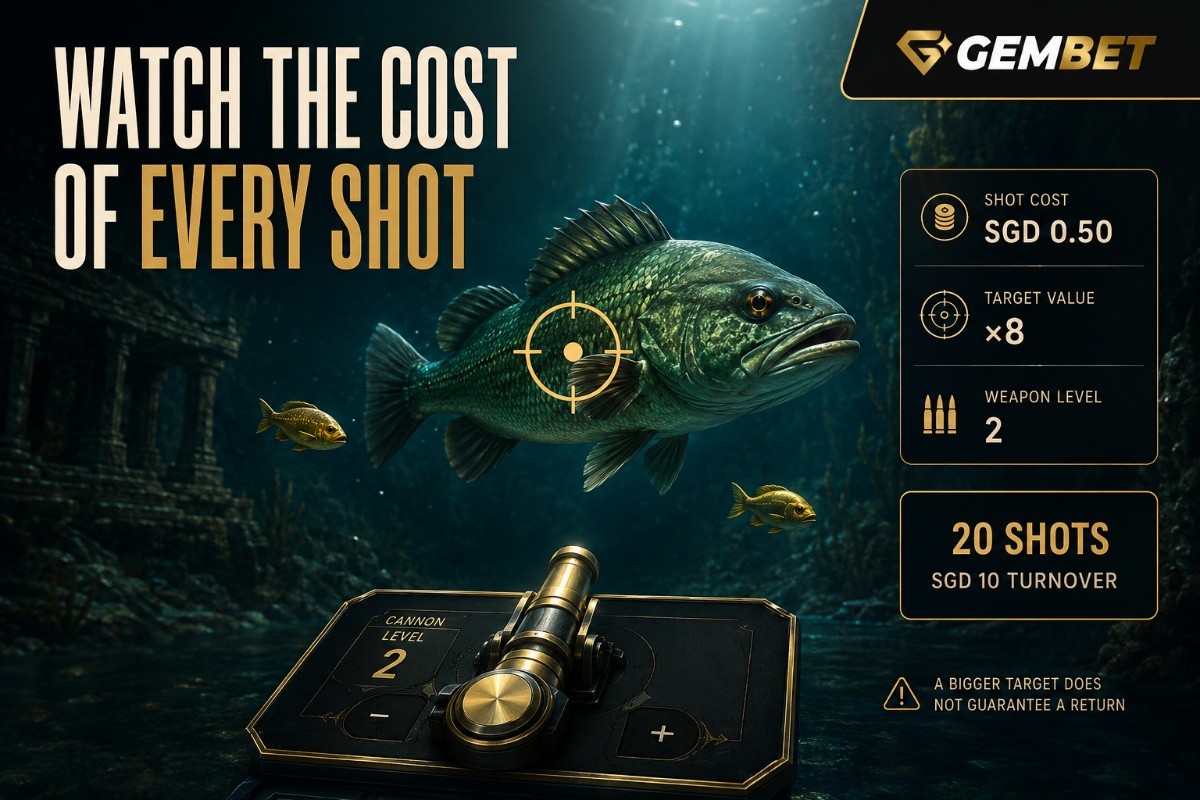
Fishing games combine arcade-style aiming with casino wagering, using moving targets, shot costs and game-specific payout values instead of reels or card hands. On Gembet, fishing games appear as a separate game category, making them a useful change of pace from Mines, Plinko and sports markets. The important part is understanding how each shot uses stake, how targets are valued and why a visually larger target is not automatically easier or more profitable to hit.
Fishing games can look highly interactive because players choose where to aim and when to fire. That control should not be confused with certainty. The programmed rules, payout table and outcome system still matter before repeated shots begin.
What are fishing games?
Fishing games are casino-style arcade titles where players usually aim at moving sea creatures or other targets and spend a defined amount each time they fire. Different targets can carry different payout values, and some titles add weapons, bosses, multipliers or temporary features. The exact mechanics depend on the game provider.
Fishing games differ from reel-based slots because the player interacts continuously with the screen. Stake cost, target value and feature rules still matter before the visual action becomes meaningful.
1 Shot cost matters before target value
The first mistake with fishing games is focusing on the reward attached to a target while ignoring how much each shot costs. If a player fires repeatedly at the same creature, several paid attempts can be used before any qualifying result appears.
For example, 20 shots at SGD 0.50 each create SGD 10 of turnover.
20 shots × SGD 0.50 = SGD 10 turnover
That figure describes money put into action, not expected loss. It shows why repeated firing can increase total exposure quickly.
2 Bigger targets do not guarantee easier returns
In fishing games, larger creatures often look more dramatic, sometimes carrying higher payout values or special effects. Screen size alone does not reveal how easily a target can be defeated or what value it offers relative to the amount spent firing.
Read the paytable or game information rather than assuming the largest creature is automatically the strongest choice. A high displayed reward can be paired with a harder or less frequent qualifying outcome.
3 Weapon upgrades can change the cost
Some fishing games let players increase cannon strength, ammunition level or another firing setting. A stronger-looking weapon may also increase the amount committed per shot, changing turnover even when the number of shots stays the same.
Before increasing power, check the displayed cost. A visual upgrade is not free unless the rules explicitly say so.
4 Rapid firing can hide how quickly stake accumulates
The pace of fishing games is important because several shots can be fired within seconds, without the natural pause of a slot spin or table round.
If 40 shots cost SGD 0.25 each, total turnover reaches SGD 10. At SGD 1 per shot, the same 40 attempts create SGD 40 of turnover.
40 × SGD 0.25 = SGD 10
40 × SGD 1 = SGD 40
The number of actions and the cost per action should be viewed together.
5 Special targets need their own rules
In fishing games, boss creatures, treasure targets or other special objects can behave differently. One title may award a fixed multiple, another may trigger a feature, and another may require a separate condition.
Do not assume a special animation has the same meaning across games. The provider’s rules remain the better reference.
6 A missed attempt does not make the next one due
In fishing games, repeated shots at one target can encourage the belief that enough previous attempts must eventually force a result. Earlier spending does not create a debt that the next shot has to repay.
If a player has already used several paid attempts, increasing the stake to “finish” the target can simply increase exposure. Previous unsuccessful shots do not guarantee the next one will produce a return.
7 Visual skill and game mathematics are different
In fishing games, aiming and target selection can make the format feel more skill-based than many casino games. Visual accuracy alone does not necessarily determine the payout. The exact title can use provider-defined probabilities, payout tables and internal logic alongside on-screen choices.
This distinction is important. A player may control where to aim, but that does not create complete control over whether the selected target produces a qualifying result.
How common fishing game elements compare
| Element | What to check | Why it matters |
|---|---|---|
| Shot level | Cost per attempt | Changes turnover |
| Target value | Published payout rule | Shows possible return |
| Weapon upgrade | Whether stake changes | Can increase cost per shot |
| Special target | Trigger or reward condition | May use separate rules |
| Auto fire | Rate and stop condition | Can repeat paid actions quickly |
The table helps separate the visual action from the parts of fishing games that directly affect stake and settlement.
Auto fire changes execution, not certainty
Where auto fire is available, fishing games may repeat shots without a new click each time. This can be convenient, but it can also increase the number of paid actions while attention is elsewhere.
Before enabling any automatic mode, check the shot value, target behaviour, firing rate and available stop controls. Automation does not make a selected target more certain to produce a payout.
Why target value should be compared with firing cost
In fishing games, a target marked with a larger payout can look attractive, but the possible return should be compared with the cost of attempts used to pursue it. A high target value does not show how many paid shots might occur first.
This is another reason to avoid judging the screen by the biggest number alone.
Can previous targets predict the next result?
Recent successes and misses can feel informative on one continuous screen. A creature being hit several times, or another recently producing a large result, does not prove what the next attempt will do.
Completed actions are history. The rules of the current attempt remain the relevant reference.
How do fishing games differ from Mines and Plinko?
Mines uses hidden grid positions and a decision about whether to reveal again, while Plinko follows a ball through pegs toward a multiplier slot. Fishing games use continuous aiming and repeated paid shots against moving targets.
If you want the grid-based format separately, the mines game guide explains mine count, safe reveals and cash-out decisions. For a drop-based mini-game, the Plinko game guide covers risk settings and multiplier layouts.
A five-step check before repeated firing
- Confirm the cost of one shot.
- Read the target payout or feature rule.
- Check whether changing weapon strength also changes stake.
- Verify whether auto fire is active.
- Set a session limit before the rapid action begins.
This keeps the format focused on information that can be reviewed before repeated paid actions accumulate.
Mobile screens can make the cost easier to overlook
On smaller displays, animation and moving targets can dominate the screen. Before firing repeatedly, confirm that the stake indicator is visible and the selected weapon level is the one intended.
A change that looks like a simple power adjustment can matter if it changes the cost per attempt.
Do not chase a target because you already spent on it
Sunk-cost thinking is a key risk. After several unsuccessful shots, stopping can feel like wasting money already spent. That money is already committed, and continuing creates new exposure rather than automatically recovering the old cost.
Decisions should be based on the current stake and rules, not on a belief that a target must eventually repay previous attempts.
Gembet currently lists fishing as a separate game category
Gembet’s current public site includes fishing games among the gaming formats available on the platform. Its casino fairness guidance also says online casino outcomes use certified random-number systems and provider-set game mathematics. For any individual fishing title, the specific information panel should still be treated as the source for shot costs, target values and special features.
Fishing games are clearer when cost stays visible
Fishing games combine fast arcade-style interaction with casino wagering, which can make the experience feel more controllable than a passive reel or wheel. The useful comparison is not simply which target looks largest or which weapon appears strongest. It is how much each attempt costs, what the rules say about the target and how quickly paid actions can repeat.
On Gembet, check the exact title before playing because fishing games can differ in weapons, special targets, payout structures and automatic controls. Keep the stake visible when increasing firing strength or using repeat features.
The practical approach to fishing games is to separate the parts you can choose from the parts you cannot guarantee. You can choose the shot value, target and whether to keep firing. You cannot turn previous misses, a large creature or a stronger-looking weapon into a certain result.
Experience the real deal with SG's top Live Dealers. Play Baccarat, Roulette & more.

